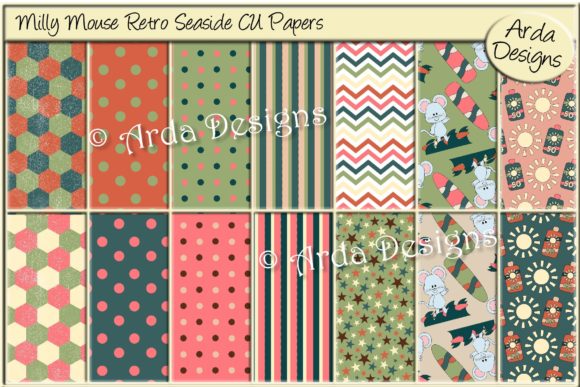
Milly Mouse Retro Seaside CU Paper: A Timeless Tool for Creative and Practical Workflows
Milly Mouse Retro Seaside CU Paper is more than just a design asset—it’s a versatile resource that can enhance the creative and practical aspects of various workflows. Designed with a retro seaside aesthetic, this paper offers a nostalgic yet modern touch that blends well with both digital and physical projects. Whether you're a designer, educator, marketer, or hobbyist, integrating Milly Mouse Retro Seaside CU Paper into your routine can streamline processes, inspire creativity, and improve overall productivity.
Understanding Milly Mouse Retro Seaside CU Paper
Milly Mouse Retro Seaside CU Paper is a high-quality, customizable paper template that features a vintage-inspired seaside theme. It includes elements such as waves, seashells, nautical motifs, and soft pastel colors that evoke a sense of calm and nostalgia. This paper is available in 12 different 300 dpi JPG formats, making it ideal for use in both print and digital applications.
The "CU" in the name stands for "Customizable Unit," which means users can tailor the paper to fit specific needs. Whether you're creating invitations, educational materials, marketing assets, or personal projects, the flexibility of this paper allows for seamless integration into your existing workflow.
Where Milly Mouse Retro Seaside CU Paper Fits in a Broader Process
Milly Mouse Retro Seaside CU Paper is not limited to a single use case. Its adaptability makes it suitable for multiple stages of a project, from planning to execution and beyond. For instance, during the planning phase, this paper can serve as a visual aid for brainstorming ideas, organizing content, or setting a thematic tone for a project. The retro seaside motif provides a cohesive backdrop that helps maintain focus and consistency throughout the creative process.
During the execution phase, the paper can act as a canvas for designing mockups, layouts, or drafts. Its high-resolution quality ensures that printed or digital outputs remain sharp and professional. Additionally, the 12 JPG formats allow for easy customization, making it simple to adjust the paper to match specific color schemes or design requirements.
In the post-project phase, Milly Mouse Retro Seaside CU Paper can be used for archiving, documentation, or even as a decorative element in office spaces. Its timeless design ensures that it remains relevant and useful long after the initial project is complete.
Integrating Milly Mouse Retro Seaside CU Paper with Other Tools and Resources
To maximize the value of Milly Mouse Retro Seaside CU Paper, it's important to consider how it interacts with other tools and resources in your workflow. Here are some common integrations:
- Design Software: Use the paper as a background layer in graphic design programs like Adobe Photoshop or Illustrator. This creates a cohesive look across all design elements.
- Printers and Print Services: The 300 dpi resolution ensures compatibility with most printers, resulting in crisp, clear prints that maintain their quality even when scaled.
- Project Management Tools: Incorporate the paper into digital whiteboards or collaboration platforms like Miro or Notion to create visually engaging task boards or idea maps.
- Education and Training: Teachers and trainers can use the paper to create handouts, worksheets, or visual aids that align with a coastal or historical theme.
- Marketing and Branding: Marketers can leverage the paper for social media graphics, email templates, or promotional materials that reflect a vintage aesthetic.
By combining Milly Mouse Retro Seaside CU Paper with these tools, you can create a more efficient and visually appealing workflow that supports both creativity and productivity.
Practical Implementation Tips and Workflow Examples
Implementing Milly Mouse Retro Seaside CU Paper into your workflow requires thoughtful planning and execution. Here are some practical tips to help you get started:
Tip 1: Choose the Right Format
Before using the paper, assess your project requirements and select the appropriate JPG format. Consider factors such as file size, resolution, and intended use (print vs. digital) to ensure optimal results.
Tip 2: Layer Strategically
When using the paper in design software, layer it appropriately to maintain clarity and control over your design elements. Place the paper behind text, images, or other graphics to avoid obscuring important details.
Tip 3: Maintain Consistency
Use the same paper across related projects to maintain a cohesive brand identity or visual style. This is particularly useful for businesses or educators who need to present a unified message.
Example Workflow:
Imagine you're a small business owner launching a new product line inspired by coastal themes. You could begin by using Milly Mouse Retro Seaside CU Paper to sketch out packaging designs, then move on to creating digital mockups in Photoshop. Finally, you could print the final designs on high-quality paper to produce sample products for testing.
Factors to Consider for Long-Term Use
When incorporating Milly Mouse Retro Seaside CU Paper into your workflow, it's essential to consider factors such as preparation, compatibility, usability, organization, efficiency, consistency, quality control, and long-term use. These elements contribute to the overall effectiveness and sustainability of the paper as a resource.
Preparation: Ensure that you have the necessary tools and software to work with the paper effectively. Familiarize yourself with its features and limitations before beginning any project.
Compatibility: Verify that the paper works well with your chosen tools and platforms. Test it in different environments to ensure it meets your expectations.
Usability: Evaluate how easily the paper can be integrated into your workflow. If it requires extensive customization or setup, consider whether the benefits outweigh the effort required.
Organization: Keep your files organized to avoid confusion or delays. Create folders or tags that categorize your projects based on the type of paper used.
Efficiency: Use the paper to streamline repetitive tasks or simplify complex processes. Its versatility can save time and reduce errors in your workflow.
Consistency: Apply the paper consistently across similar projects to maintain a uniform look and feel. This is especially valuable for branding or educational materials.
Quality Control: Regularly review the output of your projects to ensure that the paper maintains its quality and appearance. Make adjustments as needed to achieve the desired results.
Long-Term Use: Consider how the paper will be used over time. Will it remain relevant as trends evolve? Can it be adapted to new projects or purposes? These considerations will help determine its long-term value.
Conclusion
Milly Mouse Retro Seaside CU Paper is a powerful tool that can enhance both creative and practical workflows. Its retro seaside design, combined with its versatility and high-quality resolution, makes it an excellent choice for a wide range of applications. By understanding how to integrate this paper into your workflow, you can unlock new levels of efficiency, consistency, and inspiration. Whether you're working on a personal project, a business initiative, or an educational activity, Milly Mouse Retro Seaside CU Paper has the potential to make a meaningful impact.